
 Cart is empty
Introduction
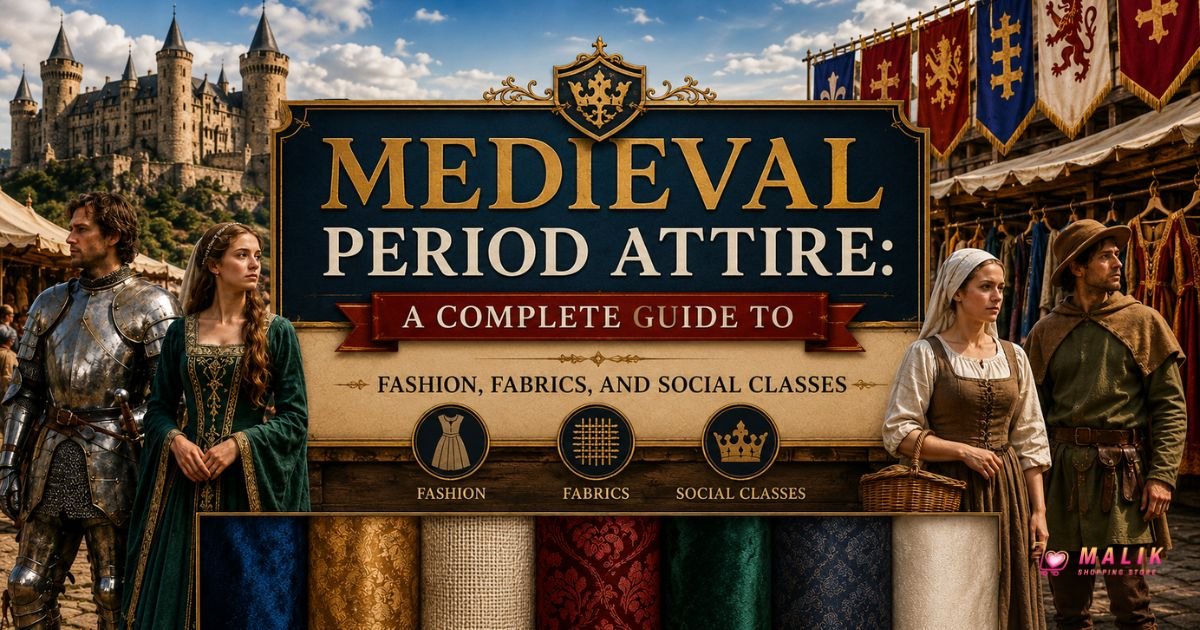
Medieval period attire was much more than clothing. It reflected a person’s social class, occupation, wealth, and culture throughout the Middle Ages. From simple wool tunics worn by farmers to luxurious silk gowns worn by nobles, every garment had a purpose and told a unique story.
In this guide, you’ll discover how medieval period attire evolved over time, which fabrics and colors were most valuable, and how fashion differed between men and women. You’ll also explore the influence of social class, dress laws, accessories, and historical trends that shaped medieval life across Europe.
Throughout this guide, you will discover how Medieval garments evolved over hundreds of years, why different social classes dressed differently, and which fabrics were considered the most valuable. You will also learn about Medieval wardrobe essentials, beautiful Medieval textiles, luxurious Medieval fabrics, and the traditions that influenced every Medieval dress and Medieval costume. Along the way, you will explore Medieval clothing styles, Historical clothing, Middle Ages clothing, Medieval apparel, and elegant Medieval outfits worn by nobles, merchants, knights, and ordinary villagers. By the end of this article, you will understand why medieval clothing was far more than fashion. It reflected culture, identity, religion, craftsmanship, and social position.
What Was Medieval Period Attire?
The Meaning and Purpose of Medieval Period Attire![]()
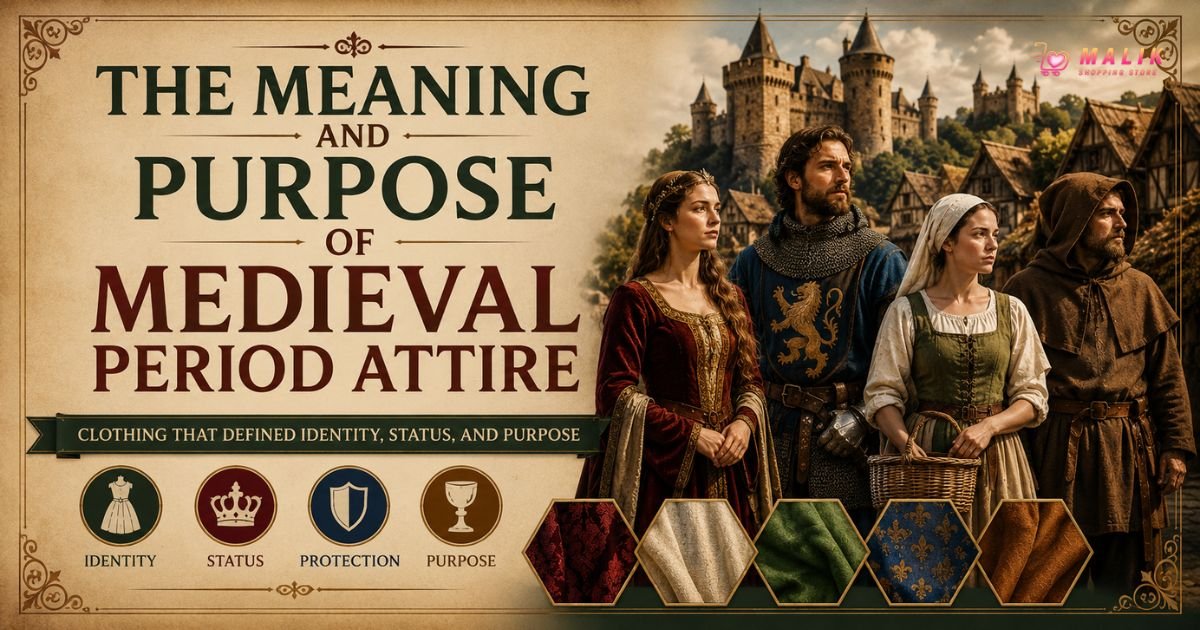
Medieval period attire refers to the clothing worn across Europe from roughly the 5th century until the late 15th century. During these centuries, people selected clothing based on practical needs as well as social expectations. Every outfit balanced comfort with status. A wealthy lord often wore soft silk and colorful embroidery, while a village worker depended on sturdy wool that could survive daily labor. Clothing also reflected local traditions because different regions produced different fabrics and followed unique styles. Even small details such as sleeve length, belt design, or head covering could reveal a person’s occupation or rank.
Unlike modern fashion, people rarely bought clothing simply because it looked attractive. Every garment served a purpose. Thick fabrics kept families warm during cold winters, while lighter linen helped people stay comfortable in warmer weather. Tailors carefully measured garments because clothing represented a valuable investment that often lasted for many years. Families repaired and reused clothing whenever possible, making each piece an important part of everyday life. Today, historians study surviving garments, artwork, and written records to understand how Medieval fashion history developed across different regions of Europe.
The Historical Timeline of Medieval Fashion
The history of medieval clothing stretched across nearly one thousand years, so styles naturally changed over time. Early medieval clothing remained simple and practical because communities focused on survival after the fall of the Roman Empire. Tunics, cloaks, and basic belts dominated everyday fashion. As trade routes expanded, new fabrics and artistic influences entered Europe. Wealthy families gained access to imported silk, fine embroidery, and colorful dyes that transformed noble fashion.
During the High and Late Middle Ages, clothing became more tailored and decorative. Tailors introduced fitted garments that highlighted the body’s shape rather than hiding it beneath loose fabric. Long sleeves, elegant gowns, embroidered borders, and luxurious accessories became symbols of prestige. This gradual transformation helped create the recognizable image of medieval royalty that many people associate with castles and knights today.
Why Medieval Period Attire Reflected Identity and Status
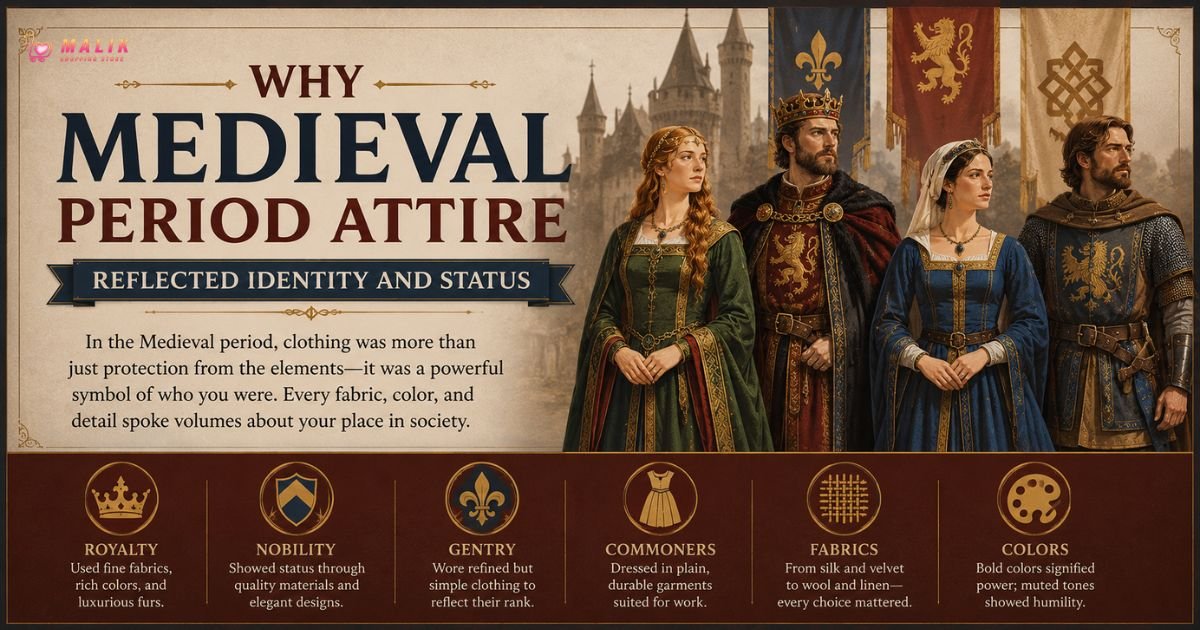
One of the most fascinating features of Medieval European clothing was its connection to social identity. Clothing instantly showed whether someone belonged to the peasantry, merchant class, clergy, knightly order, or nobility. Wealthy families displayed expensive imported fabrics, detailed stitching, precious jewelry, and rare fur linings. In contrast, ordinary workers valued durability above decoration because their clothing needed to survive demanding physical work every day.
As the famous saying goes, “Clothes make the man.” During the medieval period, this idea carried enormous importance. Society judged people quickly based on appearance, and clothing often influenced how others treated them. A noble dressed in luxurious fabrics commanded respect before speaking a single word, while a farmer wearing plain garments represented honesty, hard work, and simplicity. Clothing became both personal expression and social communication.
Medieval Period Attire for Men
Everyday Clothing Worn by Medieval Men
Most ordinary men relied on practical clothing that allowed them to work comfortably throughout the day. A typical outfit began with a Tunic, worn over a linen Chemise, also known as a Chainse or Smock. Beneath these garments, many men wore Braies, which resembled loose shorts, together with fitted Hose or Chausses that covered each leg separately. This combination created flexibility for farming, hunting, blacksmithing, and other physical work.
Outer garments often included sturdy Medieval tunics, warm Medieval cloaks, leather boots, and simple Medieval belts that carried small tools or pouches. During colder seasons, heavy wool garments provided insulation against freezing temperatures. These everyday outfits reflected practicality rather than luxury, yet skilled tailoring still produced comfortable clothing that lasted for years. This practical approach explains why Medieval men’s clothing remained remarkably functional across many centuries.
Noble and Royal Men’s Medieval Period Attire
Noblemen enjoyed access to clothing that ordinary people could only admire from a distance. Their garments featured imported silk, rich velvet, decorative embroidery, colorful woven patterns, and luxurious fur linings. Long flowing robes, elegant Mantle cloaks, beautifully decorated belts, and precious gemstones transformed clothing into symbols of authority. Wealthy knights returning from the Crusades also introduced Eastern fabrics and artistic influences that enriched European fashion.
Royal wardrobes reflected incredible craftsmanship. Skilled artisans spent weeks or even months creating a single garment using expensive imported materials. Noblemen often layered luxurious clothing to demonstrate wealth during ceremonies, banquets, and court gatherings. These magnificent outfits became excellent examples of Medieval noble clothing, while expensive Medieval silk clothing and elegant Medieval fur clothing represented the highest levels of prestige available during the Middle Ages.
Men’s Footwear, Cloaks, Belts, and Headwear
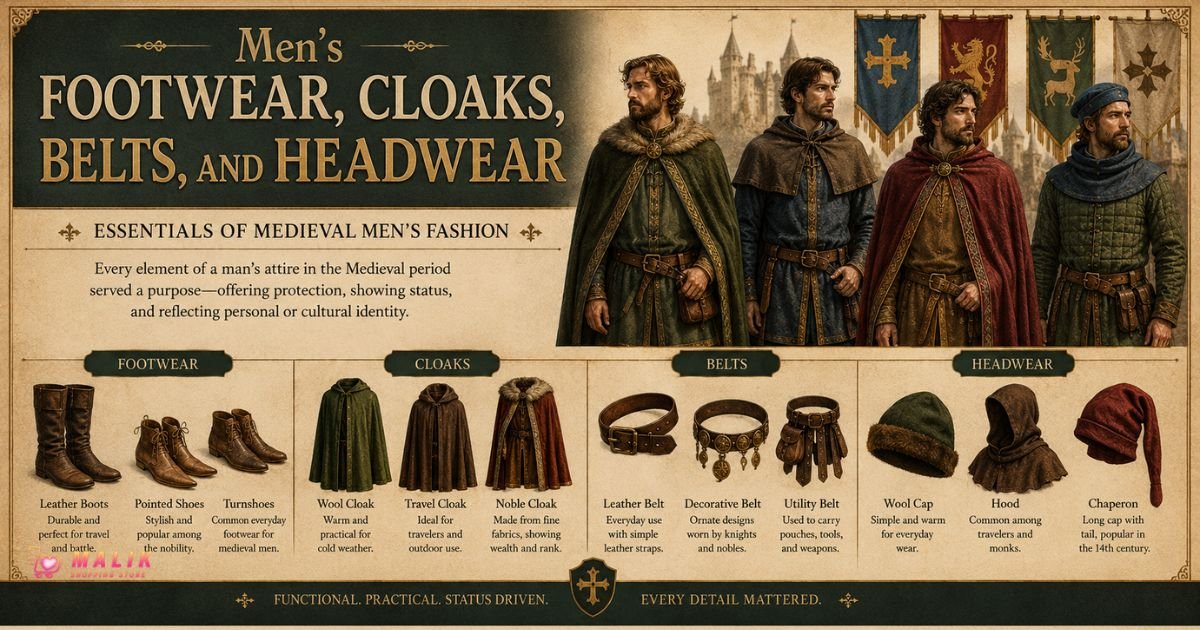
Accessories completed every gentleman’s appearance during the medieval period. Leather boots remained the most practical footwear for travel, while wealthy nobles preferred finely crafted Medieval shoes made from soft leather, velvet, or silk. Belts secured clothing and carried everyday essentials, making Medieval accessories useful as well as decorative. Some belts featured engraved buckles or decorative metal fittings that reflected personal wealth.
Head coverings varied according to occupation, weather, and social standing. Working men commonly wore a Coif, Chaperon, simple Cap, or Straw Hat to protect themselves from sun, wind, and rain. Wealthier men sometimes appeared without hats during formal events because elaborate hairstyles became fashionable in noble circles. These practical yet elegant pieces of Medieval headwear completed the overall appearance and demonstrated how every detail contributed to medieval fashion.
FAQs
Medieval period attire men
Medieval period attire for men typically included a tunic, braies, hose, a cloak, and leather shoes. Noble men wore silk, velvet, and fur, while common men preferred durable wool and linen.
Medieval period attire male
A typical medieval period attire male outfit featured a fitted tunic, chausses, a belt, and a hood or cap. Wealth and social status determined the quality of fabrics and decorative details.
Medieval outfits male
Traditional medieval outfits male included practical clothing for daily work or elegant garments for nobles, often finished with cloaks, belts, boots, and stylish headwear.
Medieval clothing female
Medieval clothing female usually consisted of a chemise, kirtle, gown, and veil. Noble women often wore luxurious silk dresses with fine embroidery and jewelry.
Medieval period attire female
Medieval period attire female combined comfort with elegance through long gowns, fitted kirtles, decorative belts, and graceful veils, with clothing styles reflecting social class and regional traditions.


Leave A Comment